

Types of SEO – Understanding Different SEO Techniques and Services
September 1, 2026
8
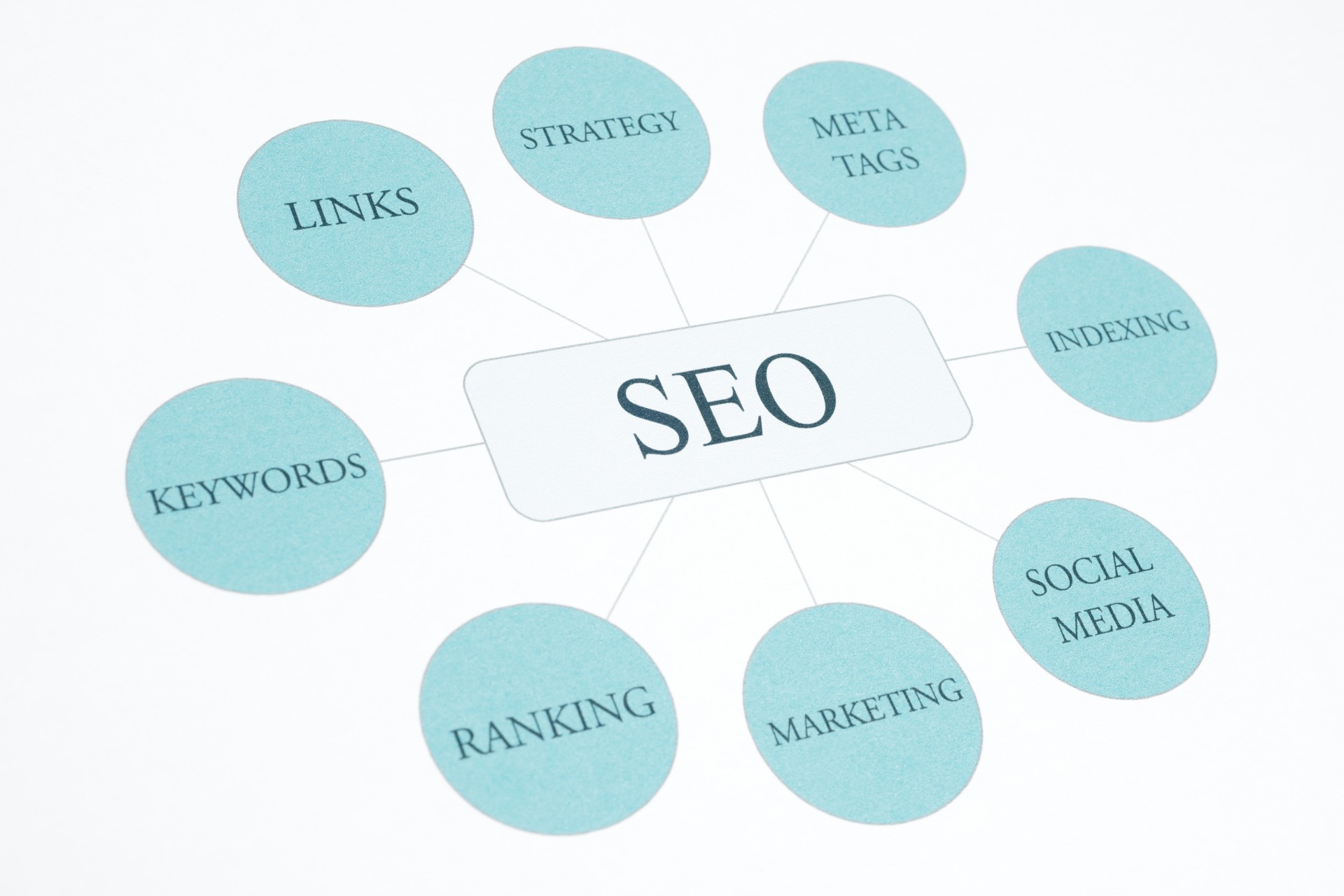
Most conversations about SEO treat it as a single discipline with a single set of activities. In practice, SEO encompasses a range of distinct techniques and service types that each address different aspects of how search engines discover, evaluate, and rank content. Some of these techniques operate on the page itself. Others operate on the technical infrastructure the page sits on. Others operate on the external signals that other websites send toward the page. And others address the specific competitive context of local or international search.
Understanding the different types of SEO, what each one does, and how they work together is the foundation for building a search strategy that addresses the full range of factors affecting organic visibility rather than over-investing in one dimension while neglecting others that are equally important to sustainable ranking performance.
This guide covers each major category of SEO with enough depth to make the distinctions genuinely useful rather than terminologically decorative.
On-Page SEO
On-page SEO encompasses everything done on the page itself to improve its relevance and quality signals for the search queries it is targeting. It is the most directly controllable dimension of SEO because every element of the page is within the publisher's control, unlike off-page signals that depend on how other websites choose to link and reference the content.
The keyword strategy dimension of on-page SEO determines which search queries the page is designed to rank for and how those queries are reflected in the page's content and metadata. Effective keyword strategy goes beyond placing target keywords in specific locations on the page to understanding the full intent behind each query and ensuring the page comprehensively serves that intent, because Google's ability to assess whether content genuinely addresses search intent is more sophisticated than keyword frequency analysis alone.
Title tags and meta descriptions are the on-page elements that directly determine how the page appears in search results and therefore directly affect the click-through rate that the page generates from its ranking position. Title tags should include the primary target keyword while being compelling enough to earn clicks from the competitive search results environment. Meta descriptions should communicate the specific value the page provides and motivate the searcher to click rather than simply describing the page's content.
Header structure, using H1 for the page's primary heading and H2 and H3 for the subsections, serves both the user experience of navigating the page and the search engine's understanding of the page's content hierarchy and topical scope. Headers that accurately describe the content of each section and that use the language patterns searchers use to describe the topic give search engines clear signals about the page's subject matter and depth.
Content quality and depth is the most commercially significant dimension of on-page SEO because it determines whether the page genuinely serves the searcher's intent at a level that earns rankings and sustains them against competition. Content that comprehensively addresses the topic, that is written with genuine expertise, and that provides specific value that the searcher cannot easily find elsewhere is the content that earns and sustains competitive rankings in a way that content produced primarily to satisfy keyword placement requirements does not.
Internal linking from the page to other relevant pages within the same website and from other relevant pages to the page contributes to the distribution of authority across the site and to the search engine's understanding of the relationships between different pieces of content. A page that is linked from multiple authoritative pages within the same site receives authority signals that a poorly linked page in the same domain does not, even if the content quality is equivalent.
Image optimisation, including descriptive alt text that helps search engines understand what images depict, appropriate file sizes that do not slow page loading unnecessarily, and descriptive file names that reflect the image content, contributes to both the page's overall technical quality signals and its visibility in image search.
Technical SEO
Technical SEO addresses the infrastructure of the website rather than the content of individual pages. It ensures that search engines can efficiently discover, access, crawl, and index the site's content, and that the technical performance of the site meets the quality thresholds that affect both ranking and user experience.
Crawlability and indexation are the most foundational technical SEO concerns because content that search engines cannot access cannot be indexed and cannot rank. Robots.txt configuration, canonical tags that prevent duplicate content confusion, XML sitemaps that help search engines discover all of the site's content, and the absence of crawl-blocking errors that prevent search engines from accessing important pages are all crawlability essentials that must be in place before any other SEO investment can generate its full return.
Site architecture and URL structure affect how efficiently search engines can navigate the relationship between different pages on the site and understand the topical organization of the content. A logical site architecture that groups related content under clearly organized categories and that uses descriptive URL structures allows search engines to build an accurate understanding of the site's content scope without requiring exhaustive crawling of every page.
Page speed, as measured through Core Web Vitals, has been a confirmed ranking signal since 2021 and is a direct user experience quality indicator that affects both rankings and the conversion rate of the organic traffic the site generates. The three Core Web Vitals metrics, Largest Contentful Paint, Interaction to Next Paint, and Cumulative Layout Shift, measure the loading speed, interactivity, and visual stability of pages respectively, and pages that fail to meet Google's thresholds for these metrics face a ranking disadvantage relative to equivalent pages that pass them.
Mobile optimisation is foundational to technical SEO because Google uses mobile-first indexing, meaning it primarily evaluates the mobile version of a page for ranking purposes. Pages that are designed for desktop and adapted poorly for mobile, or that serve significantly different content on mobile versus desktop, are evaluated based on their inferior mobile experience regardless of how well optimised the desktop version may be.
HTTPS security, which encrypts the connection between the user and the server, has been a ranking signal since 2014 and is now a baseline expectation rather than an optional enhancement. Any page served over HTTP rather than HTTPS receives both a ranking disadvantage and a browser security warning that undermines user trust.
Structured data markup, which provides search engines with explicit information about the type and content of a page's content in a standardised format, enables the rich search results such as FAQ displays, review stars, event listings, and product information that improve click-through rates and visibility in search results beyond what standard ranking positions provide.
Off-Page SEO
Off-page SEO addresses the external signals that indicate a page's authority and trustworthiness, primarily through the links that other websites point toward it. These external signals are distinct from anything the publisher directly controls on their own website, which is why they carry significant weight as credibility indicators: they reflect how other sources on the web assess the quality and relevance of the content.
Link building is the most significant off-page SEO activity because backlinks from authoritative, contextually relevant sources are among the strongest signals Google uses to assess a page's authority and trustworthiness. The quality and relevance of backlinks matters significantly more than their quantity: a small number of links from authoritative, topically relevant sources generates more ranking improvement than a large volume of links from low-quality or irrelevant sources.
The approaches that generate the most valuable backlinks are those based on genuine value creation rather than link placement negotiation. Original research that other content creators cite as a source, tools and resources that other websites link to because their audiences find them valuable, thought leadership that earns editorial citations from respected publications, and the guest contribution relationships that generate links from relevant authoritative domains all produce the organic backlinks that compound into domain authority over time.
Brand mentions and citations, including unlinked mentions of the brand name and linked citations from external sources, contribute to the brand authority signals that search engines use alongside traditional link metrics to assess a brand's standing in its category. Building brand presence through PR, content partnerships, and community participation generates brand signal accumulation that supports organic ranking even when the specific mentions do not include followed links.
Social signals, including the shares, engagement, and distribution that content receives on social media platforms, contribute indirectly to SEO by amplifying content reach and increasing the probability that the content will be discovered by other publishers who may link to it. Social media activity does not directly affect rankings through a technical mechanism, but it influences the content discovery that generates the organic links that do.
Local SEO
Local SEO is the category of SEO techniques specifically designed to improve a business's visibility in geographically targeted search results. It is most relevant for businesses with physical locations or service areas that target customers in specific geographic areas, and it encompasses both the standard on-page and technical SEO practices and a set of location-specific techniques that have no relevance for purely national or global businesses.
Google Business Profile optimisation is the most important local SEO activity for most businesses because it determines visibility in the local pack, the map results that appear prominently for location-specific searches and that are the primary discovery mechanism for many local commercial searches. A comprehensively optimised GBP with accurate and complete business information, a strong review profile, current photos, and regular posting activity generates local pack visibility that organic search alone cannot provide.
Local citation building, which involves ensuring the business's name, address, and phone number are consistently and accurately listed across the range of online directories, local platforms, and data aggregators that search engines use to verify local business information, contributes to the local authority signals that affect local pack ranking.
Location-specific content that addresses the specific needs, characteristics, and search vocabulary of the geographic audience the business serves generates local keyword rankings that generic content cannot capture. A service business operating in multiple cities that creates genuinely location-specific content for each city it serves, rather than duplicating generic content with only the city name changed, builds local topical authority that drives local organic visibility.
Customer reviews, on Google Business Profile and on other verified review platforms, serve as both local ranking signals and conversion signals that influence the searcher's decision to click through to the business or to call directly. A systematic approach to generating and responding to customer reviews maintains the review profile freshness that local ranking algorithms reward.
E-Commerce SEO
E-commerce SEO addresses the specific challenges of organic search visibility for online retail, where the volume of product pages, the similarity of product listings, the challenges of managing inventory changes while maintaining search equity, and the specific intent of commercial product searches all create SEO considerations that differ from those affecting content-focused websites.
Product page optimisation for e-commerce requires the application of on-page SEO principles at the product level, including unique and descriptive titles that reflect the specific search vocabulary buyers use for the product, detailed and original product descriptions that provide genuine information value beyond the manufacturer specifications that appear identically across many competing retailer pages, and the structured data markup that enables rich shopping results displaying pricing, availability, and ratings directly in search results.
Category page SEO is often more commercially important than individual product page SEO for e-commerce sites because category pages typically rank for higher-volume, higher-intent search terms that drive significant traffic volumes when they rank well. Category pages that combine clear navigational utility with genuine content value that addresses the category-level search intent generate both strong rankings and strong conversion rates.
Faceted navigation management is a specific technical SEO challenge for e-commerce sites that use filtering systems to allow shoppers to narrow product selections by attributes like size, color, price, and brand. Faceted navigation can generate large volumes of duplicate or near-duplicate URL variants that create crawl budget inefficiency and content duplication signals. Managing which faceted URLs are indexable and which are excluded through canonical tags or robots directives is a technical requirement for e-commerce sites with extensive product filtering.
International SEO
International SEO addresses the specific techniques required to generate organic visibility across multiple languages and geographic markets, where the standard on-page and technical SEO practices must be supplemented with location and language-specific implementation to ensure that search engines serve the right content to the right audience in the right market.
Hreflang implementation, which uses specific HTML tags to specify the language and geographic targeting of each page and to identify the equivalent pages in other language and geographic variants, is the most technically critical international SEO requirement. Without correct hreflang implementation, search engines may serve the wrong language version of a page to users in a specific market or may treat equivalent pages in different languages as duplicate content.
Domain structure decisions for international sites, including the choice between country-code top-level domains, subdirectories, or subdomains for different language and geographic variants, affect both the authority distribution across the international site architecture and the geographic targeting signals that search engines use to determine which version of a site to serve in which market.
Market-specific keyword research is essential for international SEO because search behavior varies significantly across languages and markets in ways that direct translation does not account for. The vocabulary that searchers in one market use to describe a product or service category may differ significantly from the vocabulary used in another market, and keyword research must be conducted in the native language of each target market rather than derived from translated domestic keywords.
Content SEO
Content SEO, sometimes used interchangeably with on-page SEO but more specifically focused on the strategic and editorial dimensions of content creation for organic search, addresses how the overall content program is planned, structured, and executed to build organic visibility across a defined topic domain.
Keyword research and content planning translate search demand data into a structured editorial program that systematically addresses the search queries most relevant to the brand's commercial objectives. The content plan that generates the most organic visibility is one that identifies the full landscape of commercially relevant search queries, prioritizes them by search volume, competition, and commercial intent, and maps specific content pieces to each priority query or cluster of related queries.
Content clusters and pillar pages provide the architectural framework that transforms a collection of individual content pieces into a coherent topical authority signal. The pillar page covers a broad topic comprehensively, the cluster content pieces go deep on specific subtopics within that broad topic, and the internal linking structure that connects them communicates to search engines the topical coherence and depth that builds authority across the entire cluster rather than for individual pages in isolation.
Content refreshing and updating maintains the relevance and accuracy of existing content over time, which is as important as creating new content for sustained organic visibility. Content that was accurate and comprehensive when published can become less competitive as the competitive landscape evolves and as new information makes older content less complete. A systematic program of identifying and refreshing underperforming content that has accumulated some organic authority generates ranking improvements from existing assets without the full investment of creating new content from scratch.
The Integration of SEO Types for Maximum Impact
The different types of SEO are not independent disciplines that can be optimised in isolation and combined additively. They are interdependent dimensions of a unified organic search strategy where the effectiveness of each type is partially determined by the quality of the others.
Strong content quality generates ranking potential that technical SEO makes accessible by ensuring search engines can discover and index the content. Technical infrastructure creates the foundation that on-page optimisation makes commercially valuable by ensuring the content is presented in the most search-engine-interpretable format. Off-page authority amplifies the ranking potential of content and technical quality by providing the external credibility signals that search engines use to assess trustworthiness.
A site with excellent content and technical infrastructure but limited off-page authority will struggle to rank competitively for high-competition keywords where established competitors have accumulated significant link authority. A site with strong off-page authority but poor technical infrastructure will see that authority partially wasted because search engines cannot efficiently access and index the content the authority could be supporting. And a site with both strong authority and technical infrastructure but weak content quality will not sustain rankings against competitors whose content more comprehensively serves the search intent of the queries they are competing for.
Building an SEO strategy that addresses all of these dimensions, with investment allocated across each type of SEO based on the specific gaps and opportunities that an audit of the current situation reveals, is the approach that generates sustainable organic visibility rather than the partial results that a single-dimension approach produces.
Explore Foxtale Media's full range of SEO and digital marketing services and let's build a comprehensive SEO strategy that addresses every dimension of your organic search opportunity.
Related Blog

October 6, 2026
8
In-House vs Outsourcing SEO: Which Delivers Better Results?

September 11, 2026
8
%201.svg)