

SEO Issues: 23 Common Mistakes to Avoid and How to Fix Them
September 9, 2026
8
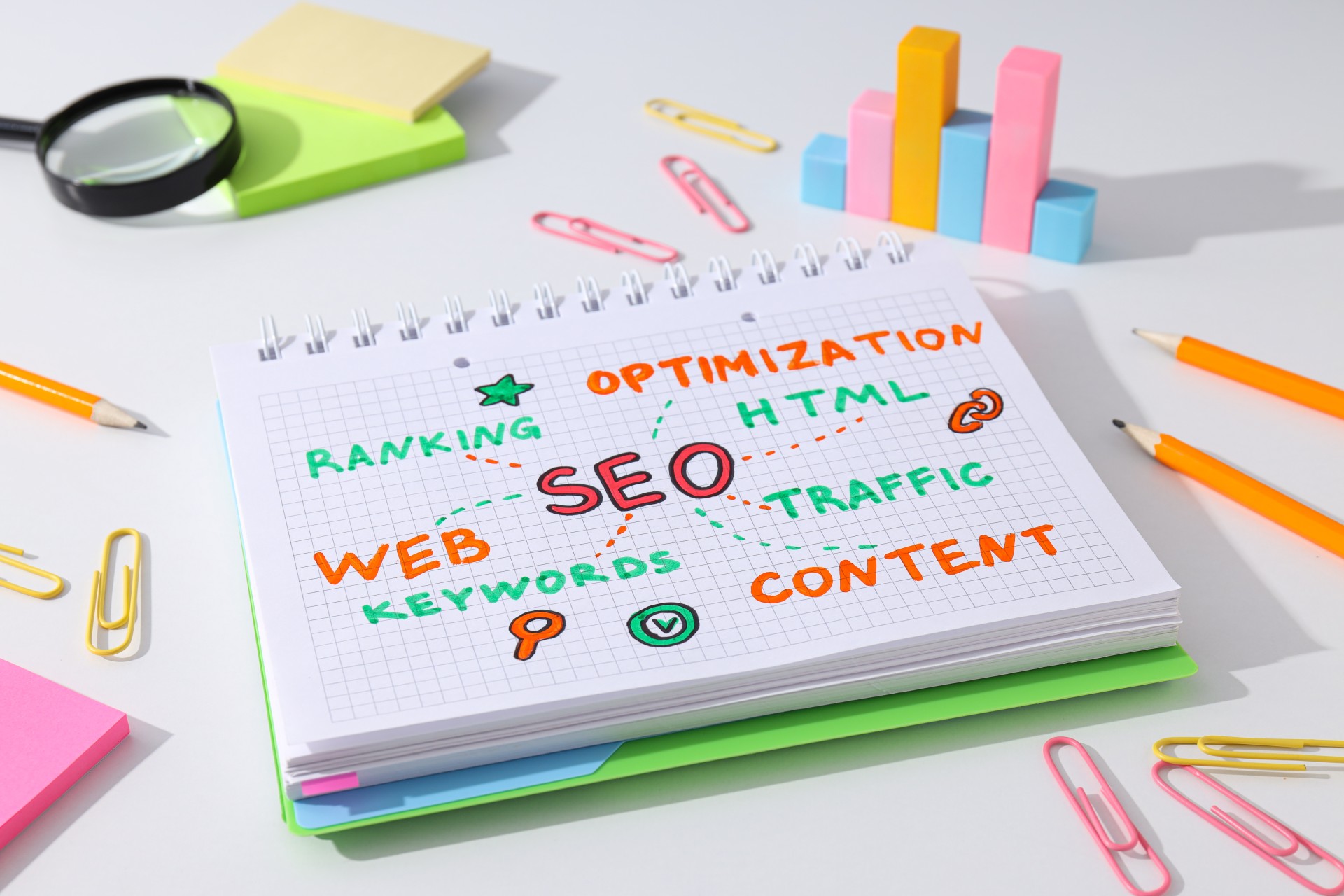
Even well-resourced businesses with capable marketing teams make avoidable SEO mistakes. Some are technical. Some are strategic. Some are content-related. And most are invisible until the moment you wonder why your organic traffic has stalled, your pages are not ranking, or your competitors keep appearing above you in search results.
This guide covers 23 of the most common SEO issues, explains why each one matters, and gives you a clear path to fixing it. Work through these systematically and you will remove the friction that is holding your site back from the rankings it should be reaching.
Mistake 1: Targeting the Wrong Keywords
Chasing high-volume keywords without considering intent or commercial relevance is one of the most common SEO mistakes of all. A business that ranks for terms its buyers are not actually searching, or that attracts traffic from an audience that will never convert, is generating vanity metrics rather than business value.
How to fix it: Match your keyword targets to actual buyer intent. Use tools like Google Search Console, SEMrush, or Ahrefs to understand who is searching, what they are looking for, and where they are in the buying journey. Prioritise terms that combine reasonable search volume with clear commercial relevance.
Mistake 2: Ignoring Search Intent
Publishing content that does not match what the searcher actually wants is a ranking killer. Google has become very effective at understanding the intent behind a query, and it rewards pages that satisfy that intent correctly. An informational query will not rank a transactional page well. A navigational query is not an opportunity for a long guide.
How to fix it: Before creating or optimising any page, look at the current top-ranking results for your target keyword. What format do they use? What questions do they answer? What depth do they go to? Your content needs to align with what Google has determined the searcher wants.
Mistake 3: Thin or Shallow Content
Pages that skim the surface of a topic without providing real depth, original insight, or useful information rarely rank in competitive markets. Google consistently favours content that comprehensively addresses a subject over content that touches it lightly.
How to fix it: Audit your existing content and identify pages with low word counts, limited coverage, or no original value. Expand them meaningfully. Add detail, examples, data, and actionable guidance. A page that genuinely earns its length will outperform a padded one, so focus on depth of value rather than hitting an arbitrary word count.
Mistake 4: Duplicate Content
Having the same or very similar content on multiple URLs within your own site confuses search engines about which version to index and rank. This can split the authority that should be consolidated on a single page and result in none of your versions ranking well.
How to fix it: Use canonical tags to indicate which version of a page is the preferred one. Consolidate genuinely duplicate pages through 301 redirects. For sites with dynamic URLs that generate parameter-based duplicates, configure your robots.txt or use URL parameters settings in Google Search Console to prevent unwanted indexing.
Mistake 5: Poor Internal Linking
Internal links are one of the most underused levers in SEO. They distribute authority across your site, help Google understand how pages relate to one another, and guide visitors deeper into your content. Sites with weak or inconsistent internal linking leave authority stranded on pages that receive it externally but fail to pass it on.
How to fix it: Create a deliberate internal linking structure based on your topic cluster architecture. New pages should receive links from existing, relevant pages. Pillar pages should link to their cluster pages and vice versa. Use descriptive, keyword-relevant anchor text that tells both Google and the reader what the linked page is about.
Mistake 6: Missing or Poorly Written Meta Titles and Descriptions
Your meta title is one of the first signals Google uses to understand what a page covers. Your meta description influences whether someone who sees your result chooses to click on it. Leaving these blank, duplicating them across pages, or writing them without keyword or conversion thinking wastes one of the simplest optimisation opportunities available.
How to fix it: Write a unique meta title for every page, keeping it between 50 and 60 characters and including the primary keyword naturally. Write a compelling meta description between 120 and 160 characters that gives the searcher a clear reason to click. Treat both as marketing copy, not administrative fields.
Mistake 7: Slow Page Speed
Page speed is a confirmed ranking factor, and it also has a direct impact on user experience and conversion rates. Slow pages lose visitors before they have read a word, and Google's Core Web Vitals metrics are increasingly central to how site quality is assessed.
How to fix it: Run your key pages through Google's PageSpeed Insights or Lighthouse. Prioritise the specific fixes flagged rather than implementing changes at random. Common culprits include uncompressed images, render-blocking scripts, lack of browser caching, and no CDN in place. Address the highest-impact issues first.
Mistake 8: Not Being Mobile-Friendly
Google indexes the mobile version of your site first. A site that provides a poor experience on mobile — with content that overflows the screen, touch targets that are too small, or text that is unreadably small — will be penalised in rankings even if the desktop version is perfectly built.
How to fix it: Use Google's Mobile-Friendly Test to check your key pages. Ensure your site uses responsive design that adapts appropriately to all screen sizes. Test on actual devices, not just browser developer tools, since real device performance often reveals issues that simulators miss.
Mistake 9: Broken Links and 404 Errors
Broken internal links waste crawl budget and create a poor user experience. Broken external links signal poor site maintenance. 404 pages that receive inbound links are losing the authority those links would otherwise deliver to a live, indexed page.
How to fix it: Run a regular crawl of your site using a tool like Screaming Frog to identify broken links. Fix internal broken links by updating the URL or removing the link. For pages that have moved permanently, implement 301 redirects from the old URL to the new one. Check for inbound links pointing to 404 pages in Google Search Console and redirect them to relevant live pages.
Mistake 10: Not Using Schema Markup
Schema markup is structured data that helps search engines understand the nature and content of your pages. Without it, you miss out on rich results — enhanced search listings that include star ratings, FAQ answers, how-to steps, event dates, and more — which consistently achieve higher click-through rates than standard results.
How to fix it: Identify the schema types most relevant to your content (Article, FAQ, HowTo, Product, Service, Organisation) and implement them using JSON-LD, the format Google recommends. Validate your markup using Google's Rich Results Test before deploying. Prioritise pages that stand to benefit most from enhanced search listings.
Mistake 11: Ignoring Core Web Vitals
Core Web Vitals — Largest Contentful Paint, Interaction to Next Paint, and Cumulative Layout Shift — are Google's specific metrics for real-world page experience. Poor scores on these metrics can suppress rankings even when content and authority are strong.
How to fix it: Check your Core Web Vitals scores in Google Search Console under the Experience report. Address layout shifts caused by images without defined dimensions or ads that load and push content down. Improve LCP by prioritising the loading of above-the-fold content. Reduce INP by minimising the impact of heavy JavaScript on interaction responsiveness.
Mistake 12: Keyword Cannibalism
When multiple pages on your site target the same or very similar keywords, they compete against each other in search results. Google cannot determine which page to rank, so it may rank neither well, or alternate between them unpredictably.
How to fix it: Audit your site for pages covering overlapping topics and keyword targets. Consolidate them where possible, redirecting the weaker page to the stronger one. Where consolidation is not appropriate, differentiate the pages clearly through distinct keyword targets and content focus so Google can rank each for its own distinct query set.
Mistake 13: No Link Building Activity
Content quality and technical SEO can take you a long way, but in competitive markets, external links from authoritative sites remain one of the most powerful ranking signals. A site that never earns backlinks will plateau below its potential regardless of how good the on-site work is.
How to fix it: Build link acquisition into your SEO programme as a sustained activity, not an afterthought. Create content that earns links naturally — original research, comprehensive guides, useful tools. Supplement this with outreach to relevant publications, digital PR campaigns, and partnership opportunities. Working with a specialist SEO agency like Foxtale Media can ensure link acquisition is executed properly rather than sporadically.
Mistake 14: Ignoring Existing Content Performance
Many businesses invest in new content while neglecting the existing pages that already have some traction. Updating and improving a page that is ranking on page two or three is often faster and more cost-effective than trying to rank a brand-new page from scratch.
How to fix it: Use Google Search Console to identify pages with significant impressions but poor click-through rates, or pages ranking in positions 8 to 20 that could be pushed onto page one with improvement. Update the content, strengthen the on-page optimisation, improve internal linking to these pages, and build additional backlinks to them.
Mistake 15: Using the Wrong URL Structure
URLs that contain random strings of characters, session IDs, or irrelevant parameters are harder for Google to understand and less likely to be clicked in search results. URL structure is a minor but real ranking signal and a significant factor in user trust.
How to fix it: Use clean, descriptive, keyword-relevant URLs that reflect the page's content and its place in your site hierarchy. Keep them as short as possible while remaining meaningful. Avoid changing URLs unnecessarily for established pages, as this requires redirects that dilute some link equity.
Mistake 16: Neglecting Local SEO
Businesses with physical locations or geographically defined service areas leave significant organic opportunity on the table when they ignore local SEO. Local searches with high purchase intent — "near me," city-specific queries, and service-plus-location searches — are often among the most commercially valuable queries your potential customers are making.
How to fix it: Claim and fully optimise your Google Business Profile. Build location-specific pages for each area you serve. Generate reviews consistently. Earn citations from local directories. Ensure your name, address, and phone number are consistent across all platforms where your business is listed.
Mistake 17: Publishing Without a Keyword Plan
Producing content on topics that feel relevant without validating them against actual search data is one of the most common content strategy errors. Topics that seem important internally may not map to any meaningful search volume, or may target terms that are so competitive you have no realistic chance of ranking for them.
How to fix it: Every piece of content should be planned against a specific keyword target before it is commissioned. Validate search volume, assess difficulty, confirm search intent, and ensure the topic fits your topic cluster architecture before assigning it to a writer.
Mistake 18: Ignoring Google Search Console
Google Search Console is a free, direct window into how Google sees your site — which queries send traffic, which pages are being indexed, what technical issues have been detected, and where manual actions have been applied. Businesses that do not check it regularly are flying blind.
How to fix it: Connect Google Search Console to your site if you have not already. Review it at minimum monthly, looking for new crawl errors, coverage issues, Core Web Vitals problems, and manual actions. Pay particular attention to pages with high impressions but low click-through rates, which represent easy optimisation wins.
Mistake 19: Not Optimising Images
Unoptimised images slow down your pages and fail to contribute to your SEO. Images without descriptive alt text are invisible to search engines and inaccessible to visually impaired users. Large file sizes are one of the most common causes of poor page speed scores.
How to fix it: Compress all images before uploading them. Use modern formats like WebP where browser support allows. Write descriptive, keyword-relevant alt text for every image. Use lazy loading for images below the fold so they do not delay the initial page load.
Mistake 20: Building Low-Quality Links
Not all links are positive signals. Links from spammy directories, private blog networks, or irrelevant low-authority sites can harm your rankings rather than help them. Google's algorithms are increasingly effective at identifying and discounting low-quality links, and egregious link schemes can result in manual penalties.
How to fix it: Audit your backlink profile regularly using Ahrefs or SEMrush. Identify low-quality or toxic links and, where they cannot be removed through outreach, submit a disavow file to Google. Focus your link-building efforts on earning links from authoritative, relevant sources through genuine editorial merit.
Mistake 21: No Content Refresh Process
Content published two or three years ago may be factually outdated, reference tools that no longer exist, or reflect search landscapes that have changed significantly. Stale content loses rankings over time as fresher, more accurate pages overtake it.
How to fix it: Build a regular content refresh process into your SEO programme. Prioritise pages that once ranked well but have seen traffic decline, and pages covering topics where information changes frequently. Update statistics, examples, and references. Improve structure and internal linking. A refreshed page often recovers rankings faster than a new page on the same topic.
Mistake 22: No Clear Conversion Path From Organic Traffic
SEO that generates traffic but no leads or sales has failed commercially, even if the rankings look impressive. Many sites create a disconnect between the content that attracts organic visitors and the conversion experience those visitors encounter on arrival.
How to fix it: Map the journey from each organic landing page to the most appropriate conversion action. Ensure calls to action are present, relevant to the content, and contextually placed rather than buried at the foot of a page the visitor has already left. Optimise the pages that organic traffic lands on for conversion, not just for rankings.
Mistake 23: Treating SEO as a One-Time Project
The most fundamental mistake of all is approaching SEO as something to implement and then leave alone. Google's algorithm evolves continuously. Competitors are actively working to displace you. New search behaviours emerge as platforms and technologies change. A one-time SEO fix becomes outdated within months.
How to fix it: Treat SEO as an ongoing programme with sustained investment in content, links, technical health, and strategy review. A monthly retainer with a specialist partner ensures the work continues to compound rather than stagnate. If your current approach lacks that continuity, it is worth reviewing your digital marketing strategy alongside your SEO investment to ensure both are pulling in the same direction.
Fixing SEO Issues Systematically
Working through this list in one pass would be overwhelming for any team. The more practical approach is to prioritise by impact. Technical issues that prevent pages from being indexed or crawled should be addressed first, since no amount of content or link work compensates for fundamental indexing problems. On-page and content issues come next, since these have the broadest effect across your site. Link acquisition and conversion optimisation are the longer-term, compounding investments that build sustained performance.
The businesses that make the fastest progress are those that treat SEO as a continuous improvement process rather than a series of campaigns. Each fix builds on the last. Each improvement reveals the next opportunity. Over time, the compounding effect of systematic SEO work produces results that paid channels alone cannot replicate.
Related Blog

October 6, 2026
8
In-House vs Outsourcing SEO: Which Delivers Better Results?

September 11, 2026
8
%201.svg)