

How to Run an Integrated OOH and Digital Marketing Campaign
December 29, 2025
8
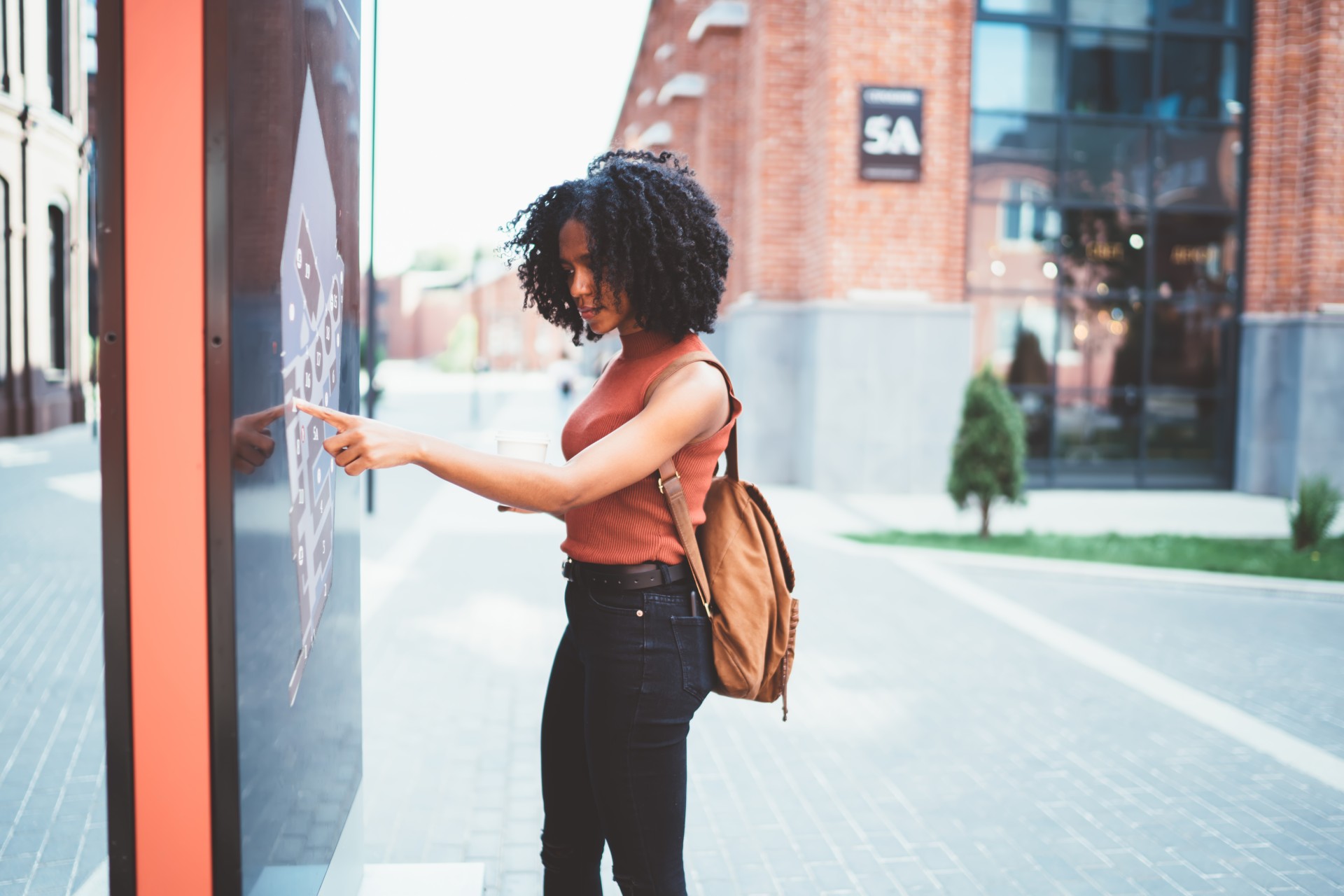
Marketing budgets are under more scrutiny than ever. Every channel needs to justify itself, and siloed campaigns that work in isolation but fail to reinforce each other are quietly draining results. The smartest brands today are not choosing between out-of-home advertising and digital marketing. They are running both together, in sync, in a way that multiplies the impact of each.
This is not a theoretical exercise. Integrated OOH and digital campaigns are being executed right now by brands of every size, from regional businesses running their first billboard to enterprise marketers managing multi-city activations. If you have been wondering how to actually make this work in practice, this guide walks you through it step by step.
What "Integrated" Actually Means in This Context
Integration does not mean simply running a billboard and a Facebook ad at the same time. It means both channels are strategically connected, sharing creative themes, audience targeting logic, timing, and measurement frameworks.
When someone sees your OOH ad on their morning commute and later encounters your retargeting ad on Instagram, that repetition is not accidental. It is engineered. The message feels familiar, trust builds faster, and the likelihood of conversion goes up significantly. That is the core value of integration.
Why OOH and Digital Are Stronger Together
Out-of-home advertising, whether billboards, transit ads, digital screens, or street-level placements, creates mass awareness. It reaches people during their physical movement through the world. It cannot be scrolled past, muted, or blocked by an ad blocker.
Digital marketing, on the other hand, offers precision. You can follow up with a specific audience, serve them dynamic creative, track their behavior, and measure outcomes down to the conversion.
Each channel addresses a weakness in the other. OOH lacks the ability to target individuals or track direct response. Digital lacks the physical presence and credibility that a large-format ad in a high-traffic area provides. Together, they cover the entire consumer journey from broad awareness to conversion.
If your current approach treats these two channels as separate line items in a media plan rather than as complementary forces, you are likely leaving a significant amount of performance on the table.
Step 1: Define a Unified Campaign Objective
Before you book a single billboard or set up a single ad set, you need one clear objective that both channels will serve. Are you launching a new product? Building brand awareness in a new city? Driving foot traffic to a physical location? Promoting a time-limited offer?
The objective shapes everything downstream. A campaign built around store visit lift will be structured very differently from one focused on brand recall or online lead generation. Pin this down first.
Your OOH placements and your digital campaigns should both be measured against this shared objective, not separate ones. This is what prevents the two teams or two agencies from working in parallel universes.
Step 2: Develop a Unified Creative Strategy
This is where many campaigns fall apart. The OOH team produces one look and feel, the digital team produces another, and the consumer encounters two completely different brand experiences. Consistency is not just an aesthetic preference; it is a performance factor.
Your creative should be built around a single central idea that translates across formats. The OOH version will naturally be stripped down to a headline, a visual, and perhaps a logo. The digital versions can carry more information, include animation, and speak to more specific audience segments. But the visual language, color palette, tone, and core message should be immediately recognizable as belonging to the same campaign.
This is also a good moment to think about how your OOH creative can drive digital behavior. A billboard can prompt a hashtag search. It can feature a short vanity URL or a QR code that bridges the physical and digital worlds. These mechanics turn a passive awareness medium into an active engagement trigger.
If you are at the stage of briefing creative teams or agencies, Foxtale Media's integrated campaign services at foxtalemedia.com/services are built around exactly this kind of connected creative thinking.
Step 3: Use OOH Placement Data to Inform Digital Targeting
Here is something that not enough marketers take advantage of. OOH placements are not random. They go up in specific locations, in front of specific demographics, during specific time windows. All of that data is usable on the digital side.
Most OOH vendors can provide you with audience demographic profiles for each placement based on footfall data, mobile location data, and third-party research. Take that data and use it to build matched audience segments in your digital platforms.
If your billboard is in a business district with high daytime foot traffic from professionals aged 28 to 45, you should be targeting that same profile in your LinkedIn and Google campaigns. If your transit ads are running across a commuter corridor, you should be serving mobile ads to devices that appear along that route.
This is what makes the combination genuinely powerful. OOH tells you where your audience lives and moves. Digital lets you follow up with them specifically.
Step 4: Time Your Digital Campaigns to Amplify OOH Exposure
Timing matters more than most brands realize. Running a retargeting campaign three weeks after your OOH flight has ended is far less effective than running it concurrently or in the days immediately following exposure.
A well-known industry pattern is called the "see and search" effect. A consumer sees an OOH ad for a brand they are curious about and later searches for it online. If your search ads, social ads, and content are not in place to capture that intent when it peaks, you lose the conversion opportunity that your OOH spend created.
Map your digital campaign calendar directly against your OOH schedule. Launch your paid search campaigns at least a few days before your OOH goes live to capture early interest. Keep your social retargeting active throughout the OOH flight and for two to three weeks after it ends. If you are running a time-limited promotion, make sure the urgency messaging in your digital ads matches the messaging on your physical placements.
Step 5: Use Mobile Location Data for Cross-Channel Attribution
One of the persistent criticisms of OOH advertising is that it is hard to measure. That criticism is becoming less valid as mobile location data makes it possible to close the attribution loop in ways that were not available even five years ago.
The methodology works roughly like this: mobile devices observed in proximity to your OOH placements during the campaign period are anonymously flagged. If those devices later visit your website, store, or app, that visit can be attributed with reasonable confidence to the OOH exposure.
Several platforms now offer this capability, either natively or through integrations with OOH vendors. It is not a perfect science, but it gives you directional evidence of how your OOH investment is contributing to outcomes.
Combine this with your standard digital analytics, including UTM-tagged URLs from QR codes and vanity URLs on your OOH creative, and you start to build a much fuller picture of campaign performance across both channels.
If you want help building a measurement framework that connects your physical and digital touchpoints, the team at Foxtale Media works with brands to do exactly this. You can see how they approach integrated campaign planning at foxtalemedia.com/services.
Step 6: Run Social Amplification Around Your OOH Moments
OOH placements, especially large-format or high-profile ones, are inherently shareable. People photograph billboards and post them. Murals go viral. Transit takeovers get written about. If your creative is strong enough and your placement is notable enough, the OOH itself can generate organic social content that extends your reach well beyond the physical audience.
You can encourage this deliberately. Run a social campaign that invites people to share photos of your OOH placements. Create a campaign hashtag that appears on both the physical and digital creative. If you are doing a particularly striking installation, alert local press and influencers in advance.
On the paid side, use your OOH launch as a reason to increase social spending. Boost awareness campaigns during the OOH flight. Serve ads to users who follow accounts relevant to the locations where your placements are running.
The OOH moment becomes a campaign event, and the digital ecosystem amplifies it.
Step 7: Test, Measure, and Iterate
Integrated campaigns are not a set-it-and-forget-it exercise. The channels interact with each other in ways that can produce surprising results, and the only way to understand what is working is to measure rigorously and adjust accordingly.
Set up a testing structure before the campaign launches. Define your key performance indicators for each channel: reach and recall metrics for OOH, and engagement, click-through, and conversion metrics for digital. Establish a baseline from previous campaigns so you have something meaningful to compare against.
During the campaign, watch for signals that the channels are reinforcing each other. A spike in branded search volume during your OOH flight is a strong signal of awareness lift. An improvement in your digital retargeting conversion rate compared to previous campaigns can indicate that warm OOH audiences are more responsive.
After the campaign, do a proper cross-channel debrief. Which placements drove the most measurable digital activity? Which audience segments responded best to the integrated messaging? What creative formats performed most strongly in each channel? These insights make your next integrated campaign meaningfully better.
Common Mistakes to Avoid
Running OOH and digital as parallel campaigns without a shared brief is the most common and most costly error. The result is two campaigns that coexist without ever actually working together.
Neglecting the "see and search" window by launching digital campaigns too late or ending them too early is another frequent mistake. The OOH spend primes the audience, and if digital is not in place to capture the resulting intent, that priming cost is wasted.
Failing to adapt creative for each format is also a recurring issue. A digital ad designed to be read at a desk does not work on a billboard viewed from a moving vehicle. Each format has its own creative requirements, even when they share a common strategic idea.
Finally, using separate measurement frameworks for each channel makes it impossible to evaluate the integrated effect. If your OOH team reports on impressions and your digital team reports on CPCs without any shared metrics connecting them, you will never know what the combination is actually achieving.
The Bottom Line
Running an integrated OOH and digital marketing campaign is not complicated in principle, but it does require deliberate planning, strong creative alignment, and a willingness to treat both channels as parts of a single system rather than independent activities.
The brands that do this well consistently outperform those that treat each channel in isolation. They get more mileage from their OOH spend because digital captures the intent it generates. They get better digital performance because OOH has already built awareness and trust with the audience they are targeting.
If you are ready to build a campaign that brings these channels together effectively, Foxtale Media helps brands plan, execute, and measure integrated marketing campaigns across OOH and digital. Explore their services at foxtalemedia.com/services and see what a genuinely connected campaign strategy looks like in practice.
Related Blog
October 6, 2026
8
In-House vs Outsourcing SEO: Which Delivers Better Results?

September 11, 2026
8
%201.svg)